42 how to read trans fats on food labels
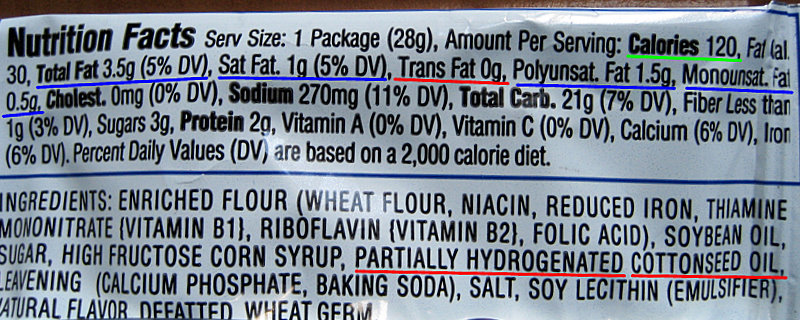
Fat Content on Food Labels - Reading Between the Lines The Mayo Foundation continued, "Still, you may be able to tell if a product contains trans fat, even if it's not directly listed on the food label. Look for the words ' hydrogenated ' or 'partially hydrogenated' in the list of ingredients. These terms indicate that the product contains trans fat. However, you won't be able to tell ... How to Read Nutrition Facts Labels the Right Way - GoodRx In addition, most trans fats are made by humans in a lab, so they are highly processed. Because of their harmful effects, the FDA has placed a ban on their use in the food supply. However, foods that contain less than 0.5 g per serving are allowed to list the trans fats as 0 g on a nutrition label, so consumption of these fats is still possible ...
Food Groups for Carbohydrates, Proteins, Fats, Vitamins 02/04/2020 · According to the National Center for Health Research (NCHR), the USDA recently replaced the food pyramid that was introduced years ago. Instead of the pyramid shape — which the NCHR says was criticized for confusing consumers — the new "ChooseMyPlate" recommendation contains five food groups of unequal sections, which include a hearty mix of …
How to read trans fats on food labels
Easy Guide to Understanding Food Labels When You Have High ... - MyDoc This means that your food may contain trans-fat even if the food label says 0 gram. Therefore it's important to check the ingredient list (more on this later). Cholesterol guidelines currently recommend having not more than 300 milligrams of cholesterol per day, and if you have heart disease, aim for less than 200 milligrams per day. 2. Easy Way to Tell if Food Has Trans Fats; Don't Trust Labels Ignore the Front of the Package; Read the Ingredients List Often, the ingredients are in super tiny print. Use a magnifying glass if you must. Often, the ingredients list is lengthy. Take the time to read every word! If the ingredients list contains the following items, the food has trans fats: "Partially hydrogenated" or just "hydrogenated." Food Labels (for Teens) - Nemours KidsHealth That's because they don't raise cholesterol levels like saturated fats and trans fats do. Both saturated and trans fats are considered "bad" because they can increase a person's chance of developing heart disease. Less than 10% of calories should come from saturated fats and try to keep trans fats as low as possible (less than 1%). Cholesterol
How to read trans fats on food labels. PDF Food Label Tip: How to Choose Foods Low In Saturated Fat, Trans Fat ... trans fat, and cholesterol will raise your blood cholesterol level and increase your chances of developing heart disease. Compare food labels of similar products and choose the ones with the lowest % Daily Value* of saturated fat and cholesterol. In general, 5% or less is low. Twenty % or more is high. Also choose foods with no or low amounts of Food Labels: Fat & Cholesterol | Home & Garden Information Center When comparing food labels, combine the grams (g) of saturated fat and trans fat, then choose the food with the lower combined amount. Look for the lowest % Daily Value for cholesterol, also. Ingredients List: When a food is made with more than one ingredient, an ingredients list is required on the label. Fat - Wikipedia The most common type of fat, in human diet and most living beings, is a triglyceride, an ester of the triple alcohol glycerol H(–CHOH–) 3 H and three fatty acids. The molecule of a triglyceride can be described as resulting from a condensation reaction (specifically, esterification) between each of glycerol's –OH groups and the HO– part of the carboxyl group HO(O=)C− of each fatty ... How to Read Nutrition Labels - Frederick Health These are the essentials: Serving Information (top of the label): The number of servings in the package or container and the serving size. The serving size is the amount that people typically eat or drink— not how much you should eat or drink. Calories (second on the label): A measure of how much energy you get from a serving of the food.
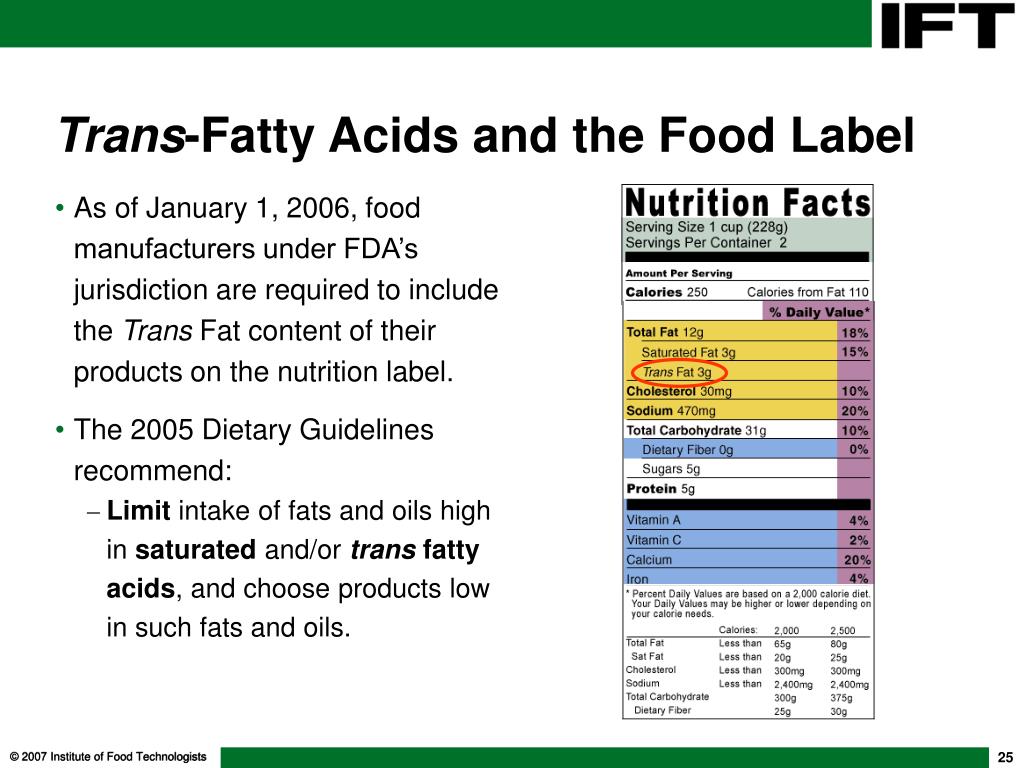
PDF How to Read the Food Label - University of California, Santa Cruz Know your fats. Look for foods low in saturated fats, trans fats, and cholesterol to help reduce the risk of heart disease (5% DV or less). There's no DV for trans fat because it's best to limit or avoid it. Keep sodium in check. Processed foods are often high in sodium. Look for low- sodium foods with less than 140 mg per serving. FDA Trans Fat Labeling: What You Need to Know - LabelCalc According to the FDA, trans fats should appear as "Trans fat" or "Trans" on the nutrition facts panel on a separate line located directly underneath "Saturated fat." Values for trans fats must appear in grams per serving. If the value for your product is under 5 grams per serving, then you must round it to the nearest 0.5 gram. Trans Fat on Food Labels: Now You See It, Now You Don't The latest US Food and Drug Administration (FDA) rules allow manufacturers to list "0 trans fats" on the labels of foods that have less than 0.5 grams (g) of trans fats per serving. Because official serving sizes are often unrealistically small, it would be easy to consume several servings a day of products that have less than 0.5 g of trans ... Trans fatty acids - Food Standards Are trans fatty acids identified on food labels? Manufacturers are not required to declare TFAs on the label, although they can provide this information voluntarily. However, TFAs must be declared on a label if the manufacturer makes a nutrition content claim about cholesterol or saturated, trans, polyunsaturated, monounsaturated, omega-3 ...
Trans fatty acids - Food Standards Are trans fatty acids identified on food labels? Manufacturers are not required to declare TFAs on the label, although they can provide this information voluntarily. However, TFAs must be declared on a label if the manufacturer makes a nutrition content claim about cholesterol or saturated, trans, polyunsaturated, monounsaturated, omega-3 ... Fats | Nutrition.gov Food Labels; Food Shopping and Meal Planning; Meal Prep and Cooking Tips; Recipe Collection; Sustainable Eating; ... Read about monounsaturated and polyunsaturated fats - what they are, where they are found, what they do, and how to use the Nutrition Facts Label to replace saturated fat with mono and polyunsaturated fats. ... Trans fats are ... Reading food labels: Tips if you have diabetes - Mayo Clinic Put sugar-free products in their place. Sugar-free doesn't mean carbohydrate-free. Sugar-free foods may play a role in your diabetes diet, but remember that it's equally important to consider carbohydrates as well. A sugar-free label means that one serving has less than 0.5 grams of sugar. When you're choosing between standard products and ... Trans fat - Wikipedia Trans fat, also called trans-unsaturated fatty acids, or trans fatty acids, is a type of unsaturated fat that naturally occurs in small amounts in meat and milk fat. It became widely produced as an unintentional byproduct in the industrial processing of vegetable and fish oils in the early 20th century for use in margarine and later also in snack food, packaged baked goods, and for frying fast ...
PPT - Nutrition and Labeling 101 PowerPoint Presentation, free download - ID:60319
Understanding Food Nutrition Labels | American Heart Association 1 - Start with the serving information at the top. This will tell you the size of a single serving and the total number of servings per container (package). 2 - Next, check total calories per serving and container. Pay attention to the calories per serving and how many calories you're really consuming if you eat the whole package.

List of Foods That Are High in Saturated Fat and Trans Fatty Acids | LIVESTRONG.COM
How to Read Food Labels for Fats and Oils A Note on Ingredient Lists. Fats and oils can come from many sources, like animal fats, fish, seeds, plants, and nuts. Reading the ingredient lists on products will reveal the source of the fat. For oils and fats ingredient lists, fats and oils are referred to by their common names (e.g., "beef fat," "cottonseed oil").

Due to new FDA rules, food labels must now list trans fats as well as... News Photo - Getty Images
How to read a nutrition label (without being tricked) | Daily Star Try to choose foods high in dietary fibre and unsaturated fats, low in saturated fats, sodium, and added sugars. Watch out for trans-fat. Manufacturers are allowed to label a nutrient as 0g if it ...
The Trans Fat Lie!
How to Understand and Use the Nutrition Facts Label | FDA It can tell you if a serving of food is high or low in a nutrient and whether a serving of the food contributes a lot, or a little, to your daily diet for each nutrient. Note: some nutrients on the...

What Does the Term Unsaturated Fat on a Food Label Mean? | Healthy Eating | SF Gate
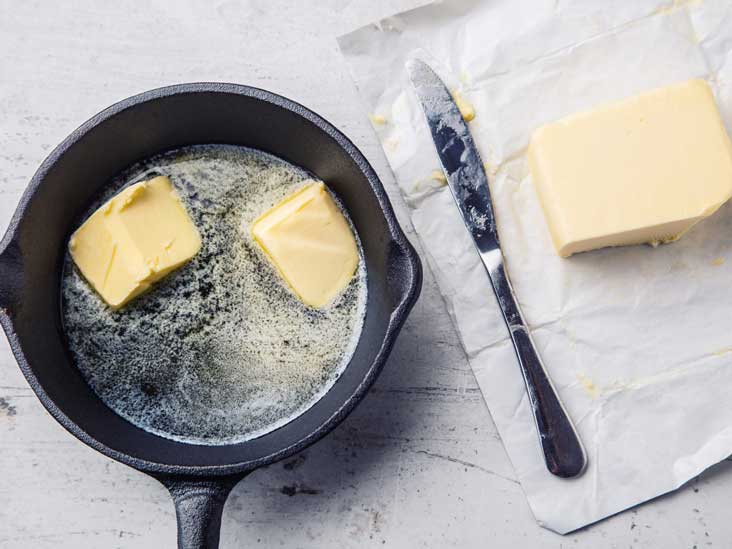
5 Ways to Avoid Hydrogenated Oil - Healthline 16/08/2022 · According to the U.S. Food and Drug Administration (FDA), a company can label a food free of trans fats if the actual content is 0.5 grams per serving or …

Reading Food Labels - A Necessary Evil - Barbara H. McNeely
PDF Learn to Read Food Labels Protect Your Heart: Avoid Artificial Trans Fat Start Here: Serving Size Always check the serving size and number of servings in the container. This product has 2 servings. Then, look for "TransFat" listed under "Total Fat." If you eat this whole box, you are eating 2 servings and 4g of trans fat! For more information on trans fats, call 311 or visit nyc.gov/health REMEMBER

GreenHearts: Food Labels and Trans Fat
Interpreting Total Fat and Types of Fat on Food Labels - Nina Cherie ... Determining the type of fat can help you decide whether or not a food is rich in 'healthy' and/or 'unhealthy' fats. Trans fats and, in some cases saturated fats, are considered "unhealthy" or "bad" while monounsaturated and polyunsaturated (omega-3) fats are generally healthier alternatives or "good" fats.

Pin on Food Label Lesson
Understanding Ingredients on Food Labels - American Heart Association Mar 06, 2017 · But when it comes to sodium, added sugars and saturated and trans fats – which in excess can damage your heart health and increase your risk of heart disease and stroke – it can be difficult to tell just how much is in there. The reason is, these ingredients can go by several names. There are many terms used for sugar on food labels.

Due to new FDA rules, food labels must now list trans fats as well as... News Photo - Getty Images
Food Labels | CDC - Centers for Disease Control and Prevention All the numbers on this label are for a 2/3-cup serving. This package has 8 servings. If you eat the whole thing, you are eating 8 times the amount of calories, carbs, fat, etc., shown on the label. Total Carbohydrate shows you types of carbs in the food, including sugar and fiber. Choose foods with more fiber, vitamins, and minerals.
5 Ways to Avoid Hydrogenated Oil
Trans fat information on food labels: consumer use and ... - PubMed Purpose: Consumers' use and interpretation of trans fat information on food labels were explored. Methods: Consumers completed an interviewer-administered questionnaire in one of three grocery stores selected purposively to represent geographical location. Data analysis involved examining the relationship of age, gender, grocery shopping habits, household size, and source of nutrition ...

Understanding the FDA’s Trans Fat Label Requirements : ObesityHelp
How To Read Food and Beverage Labels - National Institute on Aging Feb 24, 2022 · Avoid trans fats altogether — look for hydrogenated oil or partially hydrogenated oils in the ingredients list. Light, low-calorie, organic labeling — what do these mean? Sometimes, food and beverage packaging includes terms that may try to convince the consumer the food is healthy.

Read food labels – Step 1: Check the Fat Content | Healthy Living SG
Dietary fats explained: MedlinePlus Medical Encyclopedia Jul 13, 2020 · Experts are working to limit the amount of trans fats used in packaged foods and restaurants. You should avoid foods made with hydrogenated and partially hydrogenated oils (such as hard butter and margarine). They contain high levels of trans-fatty acids. It is important to read nutrition labels on foods.
The Art Of Reading Food Labels – Part 2 — Embracing Health | Holistic Healing & Lifestyle Blog
Food Labels (for Teens) - Nemours KidsHealth That's because they don't raise cholesterol levels like saturated fats and trans fats do. Both saturated and trans fats are considered "bad" because they can increase a person's chance of developing heart disease. Less than 10% of calories should come from saturated fats and try to keep trans fats as low as possible (less than 1%). Cholesterol

Trans Fats and the Food Label | VCE Publications | Virginia Tech
Easy Way to Tell if Food Has Trans Fats; Don't Trust Labels Ignore the Front of the Package; Read the Ingredients List Often, the ingredients are in super tiny print. Use a magnifying glass if you must. Often, the ingredients list is lengthy. Take the time to read every word! If the ingredients list contains the following items, the food has trans fats: "Partially hydrogenated" or just "hydrogenated."

I did it my way...: Unjunk Your Junk Food
Easy Guide to Understanding Food Labels When You Have High ... - MyDoc This means that your food may contain trans-fat even if the food label says 0 gram. Therefore it's important to check the ingredient list (more on this later). Cholesterol guidelines currently recommend having not more than 300 milligrams of cholesterol per day, and if you have heart disease, aim for less than 200 milligrams per day. 2.
Food Label Reading
Post a Comment for "42 how to read trans fats on food labels"